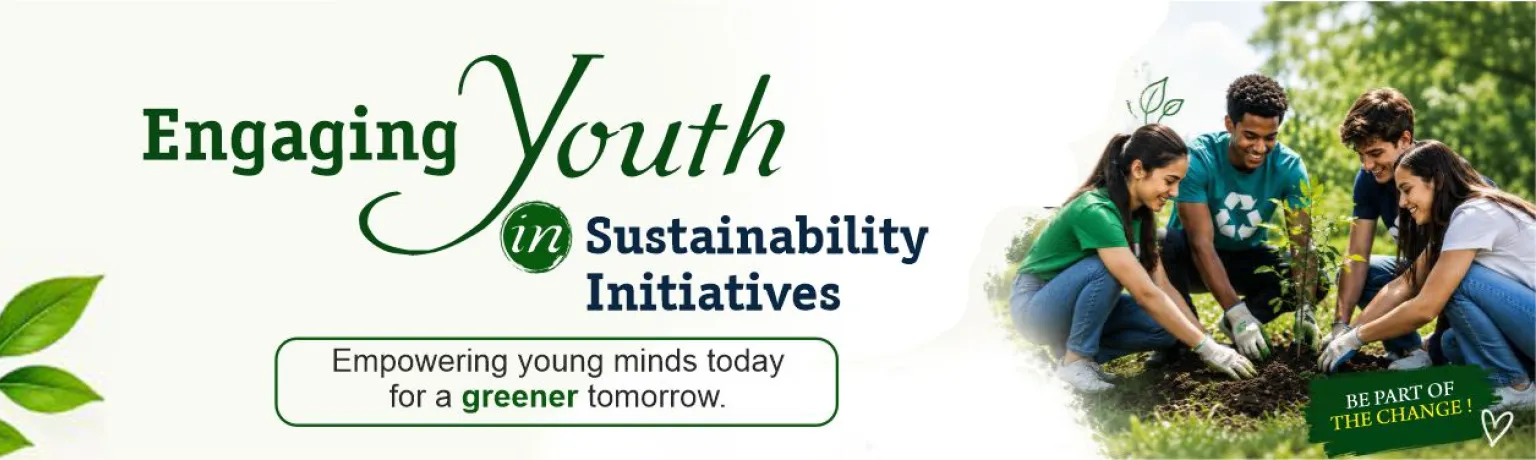
In today’s rapidly evolving world, it is impossible to ignore the role of young people in driving sustainability. With over 1.2 billion individuals aged 15 to 24 globally, youth represent a powerful force for environmental and social progress. Yet, there remains a disconnect: many young people feel ready to act but lack meaningful opportunities and platforms to do so.
Why Youth Matter
Young people bring fresh energy, creativity, and a willingness to challenge the status quo. They have grown up with climate change and environmental degradation as real, lived realities, not abstract issues. In a global UNICEF survey, 67 percent of young people aged 16 to 24 said they were worried about climate change, and 72 percent believed there was still time to address its impacts. These numbers make one thing clear: this generation is not passive. They want to contribute.
Moreover, youth engagement is not just a feel-good idea. It is central to sustainable development. The United Nations has emphasized that youth involvement is key to achieving inclusive, stable societies by 2030. This means young people must be active partners, not silent observers, in the sustainability movement.
How to Engage Effectively
1. Provide meaningful roles and leadership opportunities
It is easy to ask youngsters to help out with a cleanup or tree-planting drive, but far more powerful is giving them ownership. When youth design the project, define success, and lead outreach, they feel genuine agency. In India, for example, the "Youth4Water" initiative has engaged over 5,000 volunteers to lead local conservation efforts, guided by mentors from their communities.
2. Connect action to education and skill-building
Youth engagement works best when it aligns with personal growth. When projects help them develop communication, project management, and advocacy skills, they begin to see sustainability as a lifelong calling, not a one-time campaign. Several "climate-smart" school programs now weave sustainability into both learning and extracurricular activities, allowing students to connect theory with real-world action.
3. Make it local, visible, and social
Young people are most motivated when they can see the tangible results of their actions, such as a greener schoolyard, a functioning compost pit, or a reduced waste stream in their community. At the same time, social visibility matters. Peer groups, local pride, and digital sharing amplify the impact. In Singapore, nearly half (45 percent) of youth surveyed said they were willing to adopt sustainable habits even if it required extra effort. This shows that with the right community encouragement, commitment grows.
4. Build inclusivity and recognize youth voices
True engagement goes beyond participation; it includes listening. Unfortunately, fewer than half of young people globally feel that adults in their communities take their views seriously. This shows the need for spaces where youth input genuinely shapes decision-making. When their voices are heard, and visible outcomes follow, enthusiasm and trust naturally deepen.
Challenges to Be Mindful Of
Engaging youth in sustainability is not without hurdles. One major challenge is tokenism, where young people are included only for appearances rather than real impact. Many youth-led organizations also face resource constraints, lacking consistent funding or mentorship. Research shows that youth-driven climate movements receive only a tiny share of global environmental funding, despite their outsized influence. Sustaining long-term engagement also requires structure: once the excitement fades, projects can lose momentum unless they are embedded within institutions and ongoing programs.
Why It Matters for the Future
Engaging youth in sustainability is not just important; it is essential. The decisions, habits, and leadership patterns formed today will shape environmental outcomes for decades. When young people are empowered to design solutions, lead advocacy, and influence policy, they become not just participants but stewards of the planet.
Youth engagement also helps localize global sustainability goals. It connects the United Nations Sustainable Development Goals (SDGs) to everyday life, turning lofty aspirations into tangible community change. One youth-led initiative can inspire dozens of others, sparking a ripple effect that transforms neighborhoods, schools, and cities.
Final Thoughts
If you are reading this as a teacher, policymaker, community leader, or young person yourself, consider this: how can youth move from the periphery to the heart of sustainability initiatives? Create real leadership opportunities. Embed reflection and recognition. Keep projects hands-on and hopeful. Sustainability is not only about sacrifice; it is about creativity, innovation, and shared purpose.
When youth are truly engaged, sustainability stops being someone else’s job. It becomes our collective mission. And that makes all the difference.
References (APA 7th Edition)
EFL Global. (n.d.). The role of youth in sustainable development. Retrieved from https://efl.global/resources/insights/role-youth-sustainable-development
National Youth Council Singapore. (2023). Youth actions to address environment and sustainability issues amidst their concerns. Retrieved from https://www.nyc.gov.sg/research-engagement/youth-actions-to-address-environment-and-sustainability-issues-amidst-their-concerns
Teen Vogue. (2021). Youth climate organizations struggle for funding despite global activism. Retrieved from https://www.teenvogue.com/story/climate-cardinals-funding
UNICEF. (2021). Youth perspectives on climate: Preparing for a sustainable future. Retrieved from https://www.unicef.org/genunlimited/press-releases/youth-perspectives-climate-preparing-sustainable-future
UNICEF India. (2022). Community and youth-led action on climate change and conservation. Retrieved from https://www.unicef.org/india/stories/community-and-youth-led-action-climate-change-and-conservation