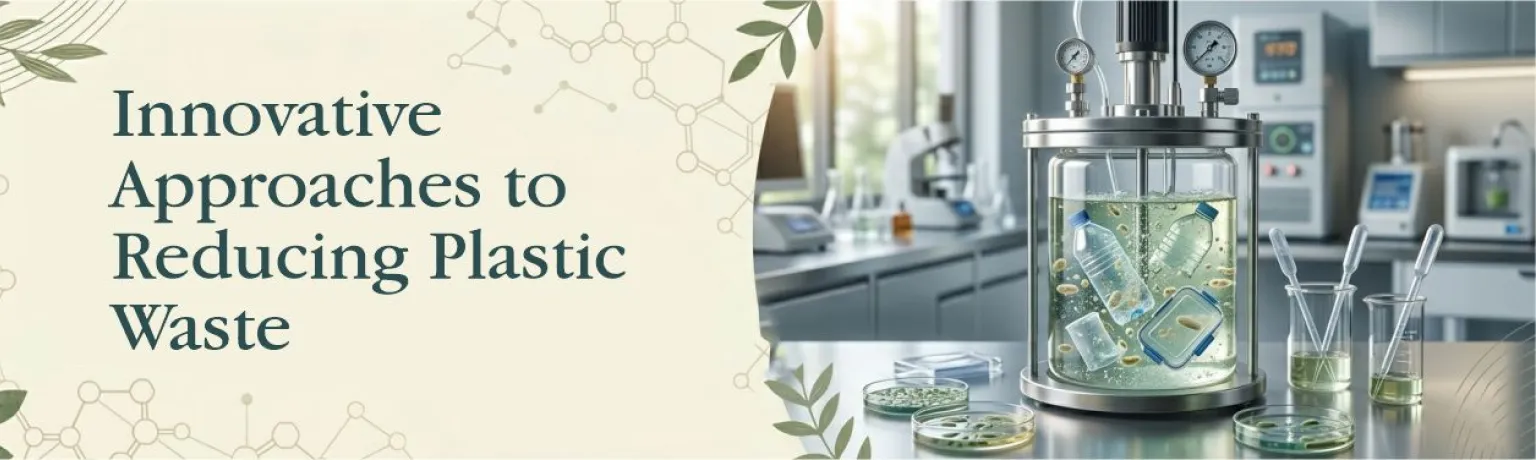
Innovative Approaches to Reducing Plastic Waste
Plastic waste is often discussed as a problem of littering, poor collection, or inefficient recycling. But by the time plastic reaches a bin, most of the damage has already been decided. Plastic waste is not created at the end of the system. It is created by how the system itself is designed and by how people interact with it every day.
Innovative approaches to reducing plastic waste therefore require looking at the entire lifecycle of plastic, from production and design to consumption, disposal, and recovery, while recognising that responsibility is shared between systems and individuals.
Rethinking Manufacturing: Reducing Plastic Before It Exists
Plastic continues to dominate because it is cheap, flexible, and easy to scale. When virgin plastic is consistently cheaper than recycled material, producers are naturally pushed toward overuse.
This stage matters because every unit of plastic produced must eventually be managed. No downstream solution can keep pace with unchecked growth in production.
Innovative approaches at this stage focus on prevention rather than management. When recycled content is prioritised, when material use is disclosed transparently, and when unnecessary plastic is designed out early, waste reduction begins before products even reach consumers.
Design and Packaging: Where Waste Is Often Locked In
Many plastic products fail not because people use them incorrectly, but because they are designed without recovery in mind. Multilayer packaging, mixed materials, and decorative plastics optimise for appearance and short term performance while limiting reuse or recycling.
People generally trust visual cues and labels. When packaging looks recyclable, they assume the system will handle it.
Innovation here lies in designing for real world recovery. Simplifying materials, reducing layers, and eliminating unnecessary plastic prevents waste far more reliably than asking consumers to compensate for poor design choices.
Business Models: How Products Are Sold Shapes Waste
Plastic waste is not only a materials problem. It is also a business model problem. Single use plastic thrives because responsibility often ends at the point of sale. Once the product is consumed, the packaging becomes invisible.
Yet the same product can generate far less waste when delivered through refill systems, returnable containers, or shared use models.
Innovative business models treat packaging as an asset rather than a disposable add on. When packaging is expected to return, systems evolve to support durability, logistics, and reuse, reducing waste without relying on constant consumer effort.
Points of Sale: Where Choices Are Shaped
Most people do not actively choose plastic. It is handed over automatically, bags, wrappers, and containers, because systems default to it.
Human behaviour is predictable. People follow what is easiest and expected.
Innovative interventions at this stage reverse defaults. When single use plastic is no longer free or automatic, and when alternatives are visible and accessible, behaviour adjusts quickly. Small changes at points of sale can lead to significant reductions in plastic use.
The Use Phase: Where Responsibility Becomes Personal
Plastic items are often treated carelessly because they are used briefly. Short use reduces the sense of ownership and responsibility.
Here, individual behaviour matters. People make daily choices, whether to reuse containers, carry bags, refuse unnecessary plastic, or care for durable items.
At the same time, these choices are strongly influenced by design. Products designed for reuse and durability naturally encourage care, while products designed for single use invite disposal. Innovation lies in aligning product design with responsible behaviour rather than expecting behaviour to compensate for poor design.
Segregation and Disposal: Shared Responsibility in Practice
Most plastic becomes unrecyclable when it is mixed with wet waste. This is a critical point where both individual action and system design determine outcomes.
People are responsible for segregating waste honestly at source and keeping plastic clean and dry.
Systems are responsible for keeping segregation rules simple, consistent, and meaningful, and for ensuring waste is not mixed again after collection.
Innovative waste systems are designed for imperfect behaviour. Simple separation, clear cues, decentralised composting, and feedback that shows impact help preserve plastic quality. Clean plastic retains value, while contaminated plastic becomes pollution.
Collection, Sorting, and Recycling: Strengthening What Already Exists
Recycling remains necessary, but it has limits. Much of it involves downcycling, and some plastic quietly exits the system through burning or dumping.
Better outcomes come from sorting closer to the source, transparency about where waste actually goes, and supporting the people who recover value from waste with safety, dignity, and fair economics. Innovation here lies in honest system design rather than exaggerated recycling claims.
Preventing Leakage: Avoiding the Point of No Return
Small, low value plastics escape systems easily and enter soil, water, and food chains. Once this happens, recovery becomes extremely difficult.
Innovative approaches prioritise preventing leakage over cleaning it up. Redesigning problematic formats, intercepting waste early, and reducing materials that consistently escape recovery systems deliver far greater impact than downstream cleanup efforts.
Aligning Human Behaviour and System Design
Plastic waste exists because of the interaction between human habits and system design. People are neither helpless nor solely responsible.
Individuals have responsibility, to refuse unnecessary plastic, segregate waste, and support reuse.
Systems have responsibility, to make these actions meaningful, visible, and effective.
Lasting change occurs when responsibility is shared, clear, and realistic, and when systems support the effort people are willing to make.
Conclusion
Plastic waste is not caused by careless individuals alone, nor can it be solved by systems acting in isolation. It is the result of how materials are produced, products are designed, business models operate, and daily choices are made.
Innovative approaches to reducing plastic waste focus on prevention over cleanup, design over blame, and shared responsibility over isolated action. When systems are designed to support responsible behaviour, and when people participate honestly, plastic waste reduces naturally and at scale.
References (APA Style)
Ellen MacArthur Foundation. (2016). The new plastics economy: Rethinking the future of plastics.
https://ellenmacarthurfoundation.org/the-new-plastics-economy
Supports claims on:
– plastic being a system design failure
– importance of redesign, reuse, and upstream intervention
– limits of recycling-only approaches
Ellen MacArthur Foundation. (2022). Global commitment 2022 progress report.
https://ellenmacarthurfoundation.org/global-commitment
Supports claims on:
– recycled content commitments
– packaging redesign
– business model shifts (reuse, refill)
Organisation for Economic Co-operation and Development (OECD). (2022). Global plastics outlook: Economic drivers, environmental impacts and policy options.
https://www.oecd.org/environment/plastics/plastics-outlook/
Supports claims on:
– rising plastic production
– virgin plastic being cheaper than recycled plastic
– limits of downstream waste management
– need for upstream policy and design interventions
Pew Charitable Trusts & SYSTEMIQ. (2020). Breaking the plastic wave: A comprehensive assessment of pathways towards stopping ocean plastic pollution.
https://www.pewtrusts.org/en/research-and-analysis/reports/2020/07/breaking-the-plastic-wave
Supports claims on:
– recycling alone being insufficient
– importance of reducing plastic at source
– leakage pathways
– system-level solutions
United Nations Environment Programme (UNEP). (2018). Single-use plastics: A roadmap for sustainability.
https://www.unep.org/resources/report/single-use-plastics-roadmap-sustainability
Supports claims on:
– single-use plastics dominating waste streams
– role of design and consumption patterns
– effectiveness of default changes and bans
United Nations Environment Programme (UNEP). (2023). Turning off the tap: How the world can end plastic pollution and create a circular economy.
https://www.unep.org/resources/report/turning-off-tap
Supports claims on:
– need to reduce virgin plastic production
– importance of reuse and system redesign
– lifecycle approach to plastic pollution
Geyer, R., Jambeck, J. R., & Law, K. L. (2017). Production, use, and fate of all plastics ever made. Science Advances, 3(7), e1700782.
https://doi.org/10.1126/sciadv.1700782
Supports claims on:
– cumulative plastic production
– short use-phase vs long persistence
– low global recycling rates
Wilson, D. C., Velis, C., & Cheeseman, C. (2006). Role of informal sector recycling in waste management in developing countries. Habitat International, 30(4), 797–808.
https://doi.org/10.1016/j.habitatint.2005.09.005
Supports claims on:
– importance of informal waste recovery
– value of sorting close to source
– social and economic dimensions of recycling
Thaler, R. H., & Sunstein, C. R. (2008). Nudge: Improving decisions about health, wealth, and happiness. Yale University Press.
Supports claims on:
– default bias
– behaviour following system design
– effectiveness of small frictions and nudges